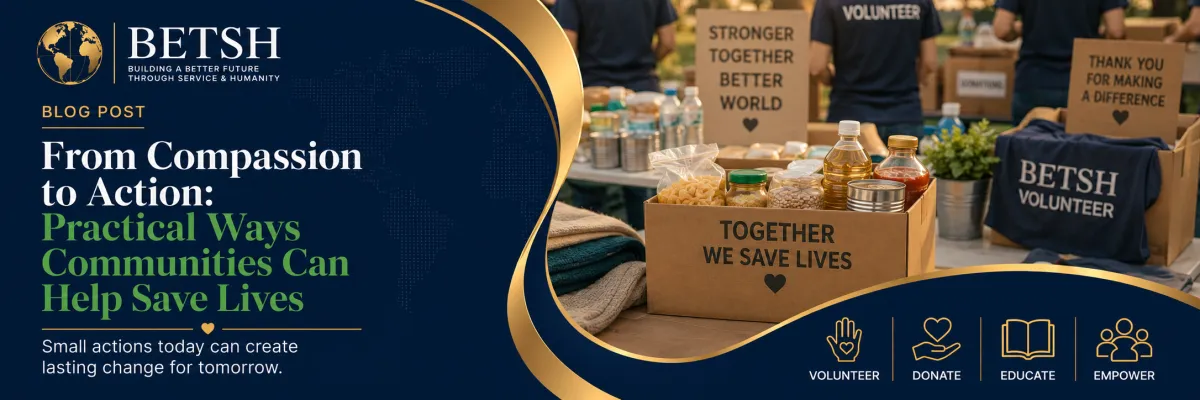
From Compassion to Action: Practical Ways Communities Can Help Save Lives
From Compassion to Action: Practical Ways Communities Can Help Save Lives
Compassion is powerful, but compassion alone is not enough.
A caring heart notices suffering. Action helps relieve it. When communities move from concern to coordinated service, lives can be protected, families can be supported, and people facing crisis can find hope.
Every community has needs. Some are visible, such as hunger, homelessness, disaster recovery, or lack of access to basic resources. Others are less visible, such as loneliness, financial instability, lack of education, limited healthcare access, or families quietly struggling to survive.
The good news is this: communities do not have to wait for perfect conditions to make a difference. Small, organized actions can create meaningful impact.
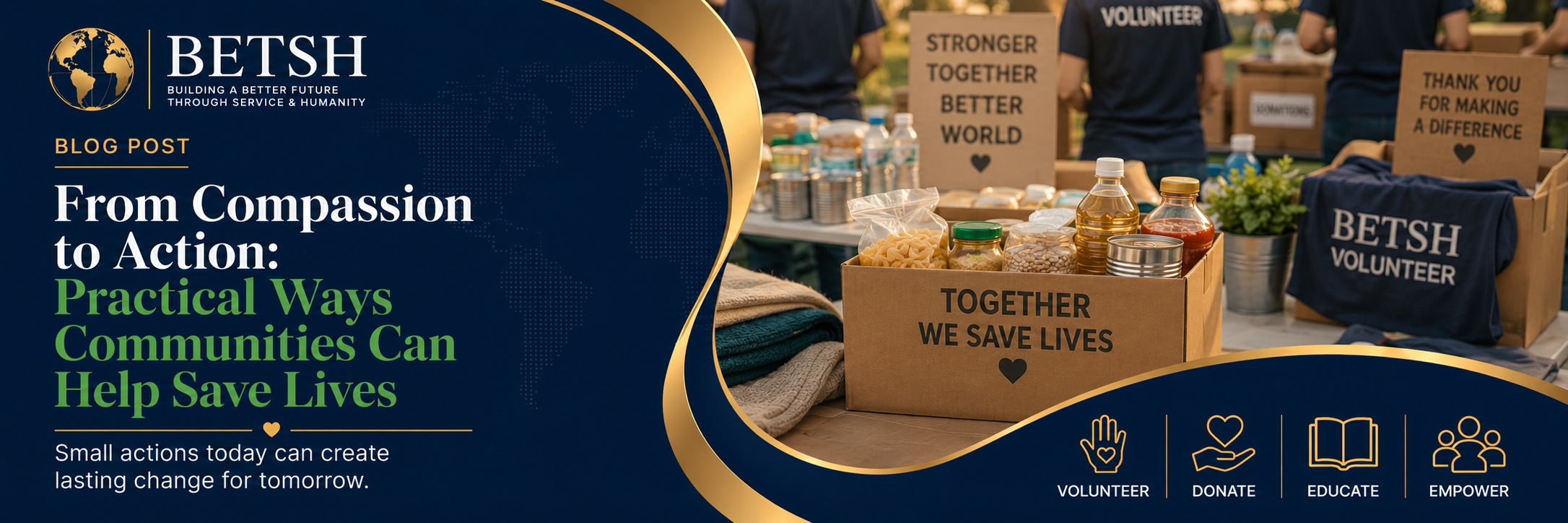
Compassion Begins with Awareness
Before a community can help, it must first pay attention.
People are often surrounded by needs but unaware of their full impact. A family may be choosing between food and medication. A senior may be isolated with no transportation. A student may lack basic school supplies. A neighborhood may be one storm away from crisis.
Awareness helps communities ask better questions:
Who is struggling?
What resources are missing?
Which families are being overlooked?
What organizations are already helping?
Where can we fill the gap?
Compassion becomes stronger when it is informed by real needs, not assumptions.
Start with Food Security
One of the most practical ways communities can save lives is by supporting food access.
Food insecurity affects health, learning, work, family stability, and emotional well-being. When people do not have consistent access to nutritious food, every part of life becomes harder.
Communities can help by organizing food drives, supporting local food pantries, partnering with churches and nonprofits, creating community gardens, reducing food waste, and connecting families to available resources.
Even small efforts matter. A stocked pantry, a delivered meal, or a community garden can become a lifeline for someone in need.
Support Health and Wellness
Saving lives also means helping people protect their health before a crisis becomes severe.
Communities can support wellness by hosting health education events, sharing information about local clinics, organizing wellness checks for seniors, helping families access hygiene products, and connecting people with mental health and emotional support resources.
Health support does not always require medical expertise. Sometimes it begins with helping someone find transportation to an appointment, checking on a neighbor, or making sure families know where to go for help.
The goal is simple: reduce barriers, increase access, and help people get support before their situation worsens.
Prepare for Emergencies Before They Happen
Disasters reveal how prepared a community truly is.
Storms, floods, fires, power outages, public health emergencies, and other crises can quickly put lives at risk. Communities that plan ahead are better equipped to respond quickly and protect vulnerable people.
Practical steps include creating emergency contact lists, identifying safe shelter locations, assembling supply kits, training volunteers, supporting first responders, and making sure elderly residents, disabled residents, and families without transportation are included in emergency planning.
Preparedness saves time. In a crisis, saved time can save lives.
Strengthen Education and Knowledge Sharing
Education is one of the most powerful tools for long-term change.
When communities share knowledge, they help people make better decisions, access resources, and create stronger futures. This can include financial literacy workshops, health education, tutoring, workforce training, disaster preparedness sessions, parenting support, and youth development programs.
Knowledge gives people options. Options create opportunity.
A community that teaches, mentors, and shares information is a community that builds capacity from within.
Build Partnerships That Work
No one organization can meet every need alone.
Real impact happens when churches, nonprofits, businesses, schools, universities, local leaders, healthcare providers, volunteers, and families work together. Partnerships allow communities to share resources, avoid duplicated efforts, and reach more people.
A church may have space. A business may have supplies. A nonprofit may have trained volunteers. A university may have research support. A neighborhood leader may know which families need help first.
When these strengths come together, the community becomes more effective.
Volunteer with Purpose
Volunteering is one of the clearest ways to turn compassion into action.
But effective volunteering is not just about showing up. It is about showing up where help is needed most.
Communities can organize volunteers to deliver food, support events, mentor youth, check on seniors, assist after disasters, sort donations, provide transportation, or help local organizations operate more effectively.
Volunteers give more than time. They bring presence, consistency, and hope.
Give Resources, Not Just Money
Financial giving is important, but communities can also give in many other ways.
In-kind donations can include food, clothing, hygiene products, school supplies, professional services, transportation, technology, meeting space, printing, equipment, and volunteer labor.
Businesses can donate expertise. Families can donate supplies. Churches can donate space. Professionals can donate skills.
Every resource has value when it meets a real need.
Advocate for People Who Are Often Overlooked
Compassionate communities speak up for people who may not have access, visibility, or influence.
Advocacy can include raising awareness, sharing trustworthy information, supporting local initiatives, connecting people to services, and helping leaders understand what communities need.
Sometimes saving lives begins with making sure the right people are seen, heard, and supported.
Create Systems, Not Just Moments
One-time acts of service are meaningful, but long-term systems create lasting impact.
A single food drive helps for a moment. A coordinated food access program can help for years. One volunteer day matters. A trained volunteer network can respond again and again. One donation is helpful. A sustainable partnership can change the way a community serves people.
Communities save more lives when compassion becomes organized, consistent, and repeatable.
How BETSH Helps Move Compassion Into Action
Best Efforts to Save Humanity, Inc. is committed to identifying, sharing, and implementing practical solutions that help save lives and improve quality of life.
BETSH believes humanitarian work is strongest when people come together through collaboration, education, research, service, and partnership. The mission is not only to care about humanity, but to act in ways that strengthen communities and create sustainable change.
From food security and education to disaster preparedness, wellness, and global collaboration, BETSH encourages people and organizations to move from good intentions to meaningful action.
Every Community Can Do Something
Saving lives does not always begin with a large program or major funding.
It can begin with a phone call.
A meal.
A ride.
A volunteer hour.
A shared resource.
A partnership.
A plan.
A person who decides to act.
When enough people take practical steps together, compassion becomes more than a feeling. It becomes a force for change.
Call to Action
BETSH invites individuals, churches, businesses, nonprofits, universities, researchers, and community leaders to join the mission.
Together, we can move from compassion to action and help save lives through service, partnership, and practical humanitarian work.
Volunteer. Give. Partner. Advocate. Take action today.
